

In many classrooms, the real challenge is not whether a teacher can speak loudly enough. It is whether every student can hear clearly from the front row to the back without the teacher pushing their voice all day. That is why a classroom voice amplifier is often chosen for clarity, consistency, and vocal support rather than sheer loudness alone.
ChatterVOX® is the original trusted portable voice amplification brand, used for more than 25 years by teachers, coaches, tour guides, presenters, and people who need gentle, hands-free support for everyday communication. For schools and instructors comparing options, the key is to match the amplifier to the room, the group, and the way the speaker moves through the space.
This guide explains how room size affects classroom amplification, how seating layout changes what listeners hear, and when a headset microphone setup makes the most sense. If you are comparing models, you can also browse the full ChatterVOX® collection or start with the official ChatterVOX® store.
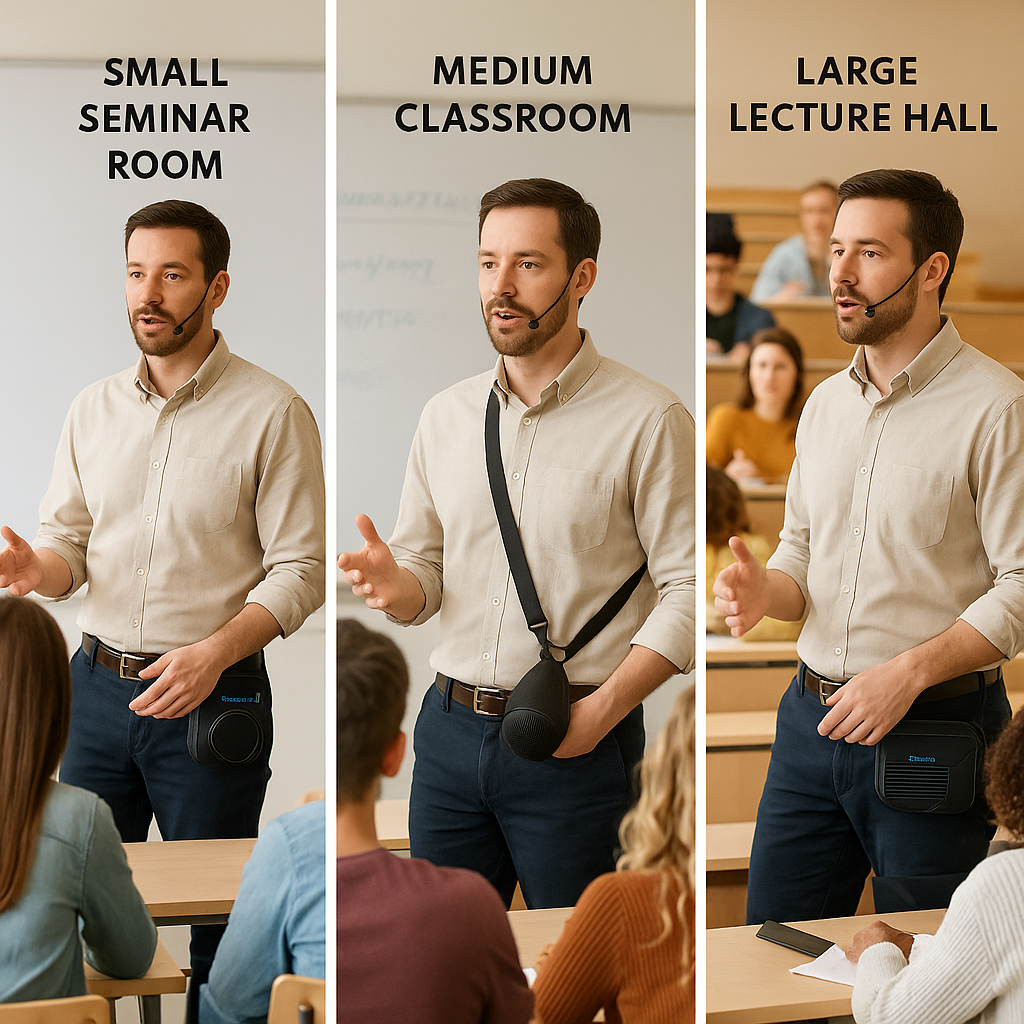
Why room size changes what you need
A classroom voice amplifier has one basic job: help your voice carry clearly across the room without forcing you to repeat yourself or raise your volume. But the amount of support you need changes with the space.
In a smaller room, students are physically closer, and walls may reflect sound back toward listeners. In a larger room, your voice has farther to travel, and clarity can drop for students seated at the edges or in the back. High ceilings, hard floors, and busy HVAC noise can make that problem more noticeable.
Room size matters because it affects:
- How far your voice needs to carry
- How much background noise competes with speech
- Whether students are seated in a compact group or spread out
- How often you turn, walk, or teach while facing different directions
- How much vocal effort you use over a full day
For many teachers, the goal is not to make the room louder. It is to make speech more even and intelligible throughout the space. A portable voice amplifier that is comfortable to wear and easy to recharge can support that goal day after day.
ChatterVOX® personal voice amplification systems are designed around that practical need: hands-free clarity, clear distortion-free output, all-day rechargeable use, and durable everyday performance for classrooms and other demanding environments.
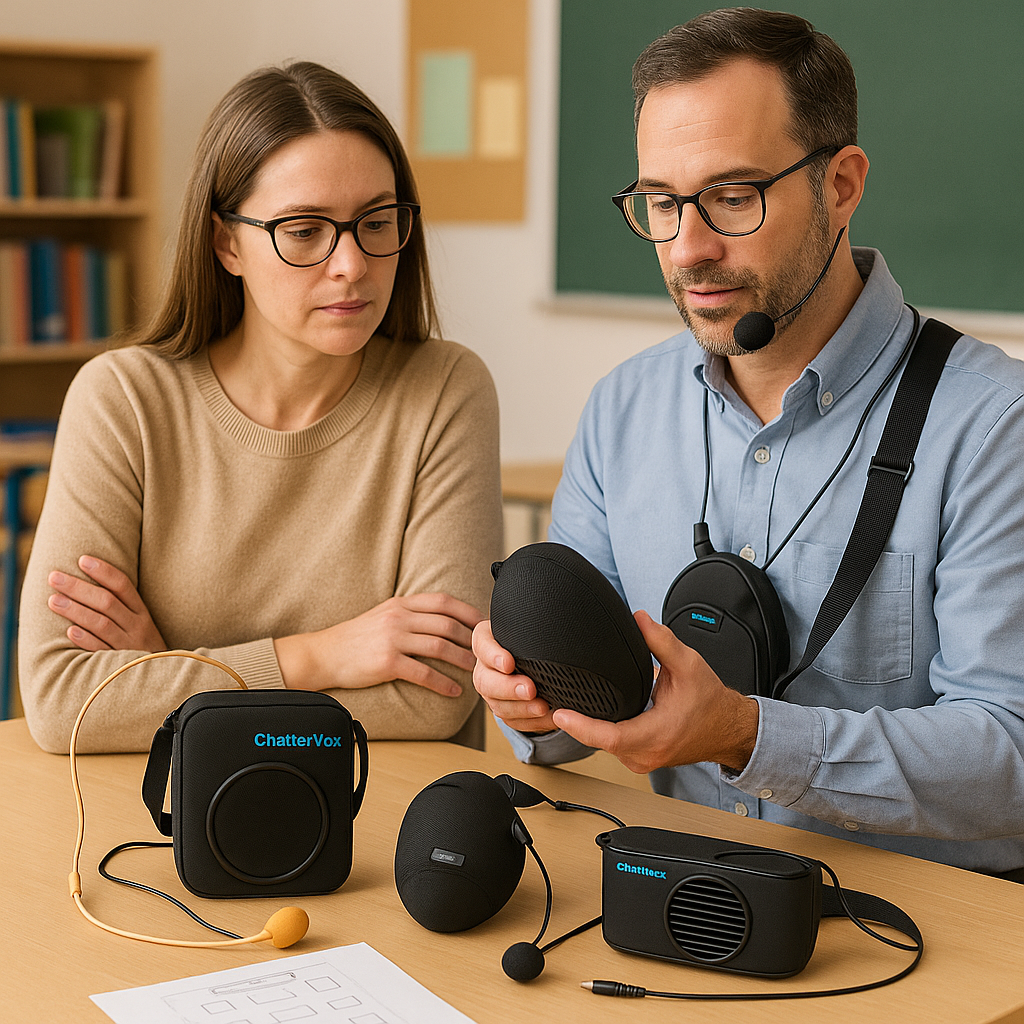
Small, medium, and large classroom scenarios
The easiest way to choose a classroom voice amplifier is to think in scenarios rather than abstract specifications. Start with the room you teach in most often, then consider whether you also move into larger shared spaces.
Small classrooms
In a small classroom, seminar room, intervention space, or therapy room, the main need is usually consistent speech clarity with minimal effort. You may not need the broadest possible coverage, but you still benefit from amplification that keeps your voice steady as you move, turn to write, or speak while assisting students.
Small-room users often include:
- Elementary teachers in compact classrooms
- Reading specialists and intervention staff
- Speech-language therapy professionals using supportive amplification during sessions
- Presenters working with small groups
For these settings, comfort and simplicity matter. A lightweight, wearable system can help reduce the urge to project unnecessarily, especially during long teaching days or periods of vocal recovery.
Medium classrooms
Medium-size classrooms are where many teachers begin to notice the limits of unaided speech. Students in the back may hear enough to follow along, but not with the same ease as students near the front. Add side conversations, hallway noise, or a fan running, and the teacher may start repeating key instructions more often.
This is a common fit for a hands-free portable voice amplifier because it supports:
- Whole-class instruction
- Movement between whiteboard, projector, and student desks
- Clearer transitions and directions
- More even audibility across the room
Teachers who move between classrooms may want a system that is easy to wear, quick to recharge, and durable enough for daily transport. The ChatterVOX® Amplio is one option to review if you want a portable system designed for clear, wearable amplification.
Large classrooms and lecture-style spaces
In large classrooms, lecture rooms, multipurpose spaces, and training rooms, room size becomes a much bigger factor. Students are farther away, seating may be wider, and the teacher may need to address the room while walking or turning frequently.
In these spaces, look for a classroom voice amplifier that supports:
- Reliable voice carry to the back of the room
- Clear output that stays intelligible rather than harsh
- Comfort for extended wear
- Rechargeable battery life that lasts through a full day or multiple sessions
- Durability for regular school use
For larger teaching environments, it can help to think beyond the word classroom. The same needs show up in coaching spaces, museums, tours, gyms, and staff training rooms. ChatterVOX® systems are used across these settings because the core problem is the same: one person needs to be heard clearly by a group without vocal strain.
If your work regularly shifts between classroom instruction and larger open spaces, it may also be worth reviewing the broader portable voice amplifier options available from the official store.
How seating layout affects clarity
Two rooms of the same size can sound very different depending on how people are seated. That is why room size alone is not enough when choosing classroom amplification.
Rows and deep rooms
Traditional rows create a longer listening path from teacher to the back of the room. In a deep room, students farthest away are most likely to miss softer consonants and quick instructions. Amplification helps keep speech more consistent from front to back.
Wide rooms
In a wide classroom, students at the far left and right edges may hear differently depending on where the teacher is standing. If you teach while moving across the front or circulating through the room, a wearable amplifier can help maintain more even coverage than relying on natural projection alone.
Pods, stations, and active classrooms
Collaborative layouts can increase student engagement, but they also increase room noise. In these settings, the issue is often not distance alone. It is competing sound. A classroom voice amplifier can help directions cut through normal activity without requiring the teacher to talk over the room.
Rooms with reflective surfaces
Hard floors, cinderblock walls, glass, and high ceilings can make speech feel less precise. Listeners may hear plenty of sound but still miss words. Clear amplification can support intelligibility, especially for students seated farther away or in acoustically difficult spots.
When evaluating your room, ask:
- How far is the farthest student from the teaching position?
- Do students sit in a narrow, wide, or spread-out arrangement?
- Is there steady background noise from ventilation, hallways, or equipment?
- Do you teach mostly from one spot or while moving constantly?
- Do students often ask for repetition during transitions or group work?
These practical questions usually tell you more than square footage alone.
When to choose a headset mic setup
For many teachers and presenters, a headset microphone setup is the most practical choice because it keeps the microphone at a more consistent distance from the mouth as the speaker turns, walks, bends, or writes on the board.
A headset setup is especially useful when you:
- Teach while moving around the room
- Turn frequently between students and board work
- Need both hands free for instruction or demonstrations
- Lead PE, coaching, fitness, or training sessions
- Guide tours or museum groups while walking
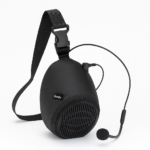
That is why products such as the ChatterVOX® Pro w/ Headset Mic and the ChatterVOX® Model 6 Coaching Amplifier are often relevant for active speaking environments. The same hands-free benefit matters in classrooms, on coaching fields, in gyms, and during tours where the speaker cannot stay fixed in one position.
Headset-based personal voice amplification systems can also be a gentle, supportive option for people living with Parkinson’s, ALS, and other voice conditions, as well as for speech-language therapy, vocal recovery, and everyday communication needs. That support is about making speech easier to hear, not about replacing medical care or professional guidance.
If your main concern is classroom consistency, a headset mic setup is often the simplest way to keep your voice clear throughout the day without changing your teaching style.
A simple classroom selection checklist
If you are choosing a classroom voice amplifier for yourself, your department, or a school purchasing team, use this short checklist to narrow the options.
- Identify the largest room you use regularly, not just the smallest one.
- Note whether students are seated in rows, wide groups, pods, or flexible layouts.
- Consider your teaching style: stationary, mobile, or highly active.
- Think about daily wear comfort and whether hands-free use is important.
- Prioritize clear, distortion-free output over raw loudness.
- Choose rechargeable portability if you move between rooms or teach all day.
- Buy from the official store when authenticity and long-term trust matter.
For many schools, the best choice is the one that fits real classroom conditions without adding complexity. ChatterVOX® has earned long-standing trust by focusing on practical performance: wearable comfort, dependable rechargeable use, durability, and clear amplification for teachers, coaches, guides, presenters, and people who need supportive everyday voice assistance.
If you are comparing room-size needs across classrooms, coaching spaces, tours, museums, or training environments, the next step is simple: review the official options and match the system to your largest typical audience and most demanding space. See ChatterVOX® voice amplifiers at SchoolPHONES®, the authorized education retailer for authentic ChatterVOX® systems.
FAQ
How do I know if I need a classroom voice amplifier?
If students in the back often ask you to repeat directions, or if your voice feels overworked after a teaching day, amplification may help support clearer speech across the room with less effort.
Is a larger classroom voice amplifier always better?
No. The best choice depends on room size, seating layout, background noise, and how you teach. The goal is clear, even speech coverage, not simply more volume.
Why is a headset mic useful in classrooms?
A headset mic keeps the microphone position more consistent as you move and turn. That usually helps maintain clearer sound during active teaching.
Can ChatterVOX® systems be used outside classrooms?
Yes. ChatterVOX® portable voice amplifier systems are also used in coaching, tours, museums, gyms, presentations, speech therapy support, vocal recovery, and everyday communication.
Where should schools buy authentic ChatterVOX® products?
For authenticity and official-store confidence, schools and individual buyers should review products through the official ChatterVOX® store and SchoolPHONES®.


Leave a Reply